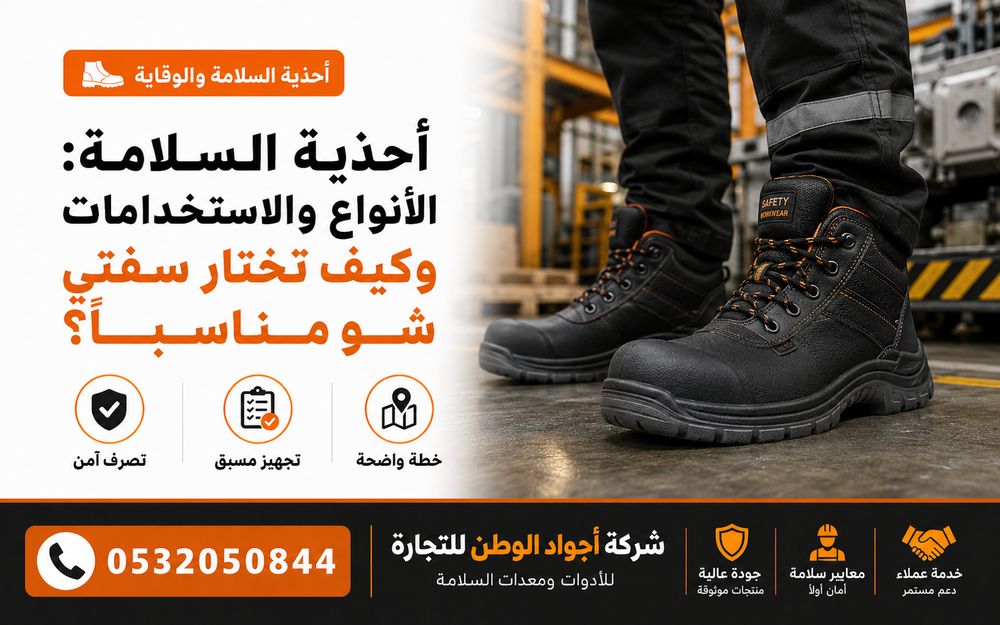
Safety Shoes and Boots is relevant for homes and facilities that want to improve readiness and prevention. People often search for safety shoes, but the right decision is not based on product appearance or price alone. It starts with understanding the hazard, the intended location, correct use, and ongoing follow-up.
Why does Safety Shoes and Boots matter?
Its value comes from reducing the chance of a problem or reducing its impact when an incident occurs. In practice, any safety solution only works well when it is in the right location, known by users, and easy to reach without blocking an exit or creating extra risk.
What risk does it address?
injury exposure or weak protection caused by PPE that does not match the real hazard, fit, or correct use. That is why Safety Shoes and Boots should be treated as part of a system that includes assessment, awareness, organization, inspection, and continuous improvement. This approach supports better choices and avoids buying equipment that does not match the real use case.
How do you choose the right option?
identify hazard type, duration, and environment, then review size, fit, comfort, and compatibility with other protective equipment. It also helps to ask a short set of questions: who will use it, where will it stay, what could block access, and whether the site needs signage, training, or routine checks.
- Start from real hazards rather than random product choices.
- Select the size, capacity, or type that fits the location.
- Check instructions, labels, and product condition before use.
- Keep the item’s location clear to workers, visitors, or household members.
Use and follow-up
inspect equipment before use, follow its instructions, and clean or replace it when damage or loss of protection occurs. After installation or purchase, use a simple review routine: visual checks, cleaning where needed, access review, and location updates whenever the layout or work activity changes.
Common mistakes
choosing PPE by appearance alone, using damaged or contaminated equipment, or treating one item as a replacement for a full protection program. Avoiding these mistakes increases the value of your safety investment and helps the product perform its intended role rather than becoming an unused item in storage.
Frequently asked questions
Is there one option that suits everyone? No. Needs vary by space, hazards, and user numbers. Is buying enough? No. Location, use, and inspection all matter. PPE is an important layer of protection, but it must work with training, safe work procedures, and hazard controls.
Conclusion
Choosing Safety Shoes and Boots thoughtfully can improve safety and organization at home or at a facility. Browse Ajwad Al Watan personal safety equipment and select protection suited to the work. Start with the .